
Warehouse Racking Systems
Pallet Racking
The WSL Advantage
Expert Pallet Racking Solutions
Looking for a pallet racking supplier you can rely on? Since 1989, WSL has delivered bespoke racking systems built for performance, durability and safety.
We design and install custom pallet racking solution that optimise your space and streamline operations, whether you’re looking to improve your current set-up or moving into a new facility.
At WSL, experience, safety, and reliability come together to support your warehouse efficiency.
Book Your Free Site Survey Today – We’ll assess your space and provide a custom plan with a detailed quote. No commitment needed. Call 0113 2045350 or email sales@wslmail.co.uk


What Is Pallet Racking?
Pallet racking is a smart way to store palletised goods, helping warehouses, fulfilment centres and industrial facilities stay organised and efficient.
It’s an independent, yet robust structure designed to facilitate the storage and handling of the fully loaded pallets. The steel framework of horizontal beams and vertical uprights enable pallets to be stored securely in rows and across multiple levels. This setup maximises both floor and height space whilst keeping the pallets organised and accessible using a forklift truck
Is All Pallet Racking The Same?
No. Pallet racking is available in numerous formats, each with its own composition and capabilities.
This variety exists because every warehouse operation is unique in terms of inventory types, processes, space dimensions, and business objectives. Selecting the right pallet racking type and configuring it to maximise space utilisation and optimise warehouse flow can greatly enhance both operational efficiency and storage capacity. A well-designed setup ensures pallets are easy to locate, facilitates the smooth movement of goods at the required operational pace, and, for warehouses handling perishable items, enables FIFO (First In, First Out) systems to maintain stock rotation and date order.
Functionality
The Wins of Expert Racking Design
Organised Storage
Keep palletised goods visible, accessible and easy to locate.
Durability
Constructed using robust steel components for long term endurance.
Space Optimisation
Maximises both horizontal and vertical warehouse space.
Cost Effectiveness
Can eliminate the need for a larger or additional storage facility..
Customisation
Configured to ensure optimal warehouse layout with inventory specifications matched.
Inventory Control
Facilitates accurate inventory tracking with discrepancies easier to detect.
Load Bearing Capacity
Robust structures designed to safely support heavy loads.
Accessibility
Simplified access to required pallets using forklift trucks.
Inventory Support
Enables specific inventory needs to be prioritised through First-in First-out (FIFO) or First-in Last-out (FILO) methods, aiding speed, volume and temperature control requirements.


The best fit for your pallet racking needs
The task of developing the right pallet racking solution becomes effortless with the expertise of WSL and our highly experienced pallet racking Design Technicians. Choosing the right pallet racking system is essential to meet your precise requirements, ensuring maximum utilisation of both floor and vertical space while optimising your warehouse layout. Our technicians will thoroughly assess your space and take the time to understand your inventory, workflows, and operational needs. This enables us to design a bespoke solution that enhances inventory management, stock control, safety, and cost-efficiency, all while making the most of your available space.
8 Common Pallet Racking Types:
Wide Aisle Racking
Developed using the adjustable pallet racking (APR) compoenents, Wide Aisle Racking is a highly versatile cost effective system which can be configured to suit your space and operational needs. It will adapt easily at any time to accommodate changes, gives you direct access and requires no specialist handling equipment. A preferred choice within a wide range of industries, wide aisle racking is comprised of basic components making it a cost effective and highly effective solution.
Double Deep Racking
Double deep racking is a similar configuration to the wide aisle racking system and is structured using the same components, however bays are two pallets deep. Being positioned back-to-back the bays create a four-pallet depth between each aisle instead of two, adding further storage capacity through a reduction in unnecessary aisle space.
From each aisle, a forklift truck is used to access the frontal pallet before being able to access the pallet behind using a fork extension. While this setup reduces selectivity, it maximises pallet storage capacity and offers optimal use of the warehouse space.
Narrow Aisle/VNA Racking
Through its narrowed aisle width of approximately 2.9 metres and racks built to ceiling height, the narrow aisle racking system can significantly increase storage capacity when compared to the standard wide aisle racking, which typically requires aisle widths of 3.4-4 metres. The narrowed aisles allow for more rows to be incorporated, whilst the ceiling height racks maximise the storage potential of each row. The racks at height are easily accessible with the use of a high-reaching fork-lift truck (FLT)
Very narrow aisle racking (VNA) takes space utilisation a step further with aisle widths of just 1.5 metres. This system relies on specialist FLTs of a slim profile and the ability to reach high racks. These are wire guided trucks and move in a forward and reverse motion, eliminating the need to turn within the aisle. Beyond the racks, the exceptional performance of these specialist trucks diminishes, and this can slow down overall performance.
To address this, operations utilising the VNA racking system, often employ Pick and Deposit stations (P&Ds) at the end of the racking rows. These stations act as intermediary points where pallets can be transferred between counterbalance trucks, which operate outside the racking system and the specialist VNA truck, allowing each truck type to function in its optimal environment.
Useful Insight – Narrow Ailse Racking Vs VNA Racking – What’s The Difference?
Drive-in Drive Through Racking
Waste no space with a Drive-in/Drive-through pallet racking system both of which provide high density storage and can utilise up to 85% of your cubic area. They bring an economic advantage to cold store environments looking to reduce energy consumption because the racks are purposely configured to provide high density storage. Drive-in operates using the First-in Last-out (FILO) method and requires only one working aisle for loading and picking. Drive-through has two working aisles running parallel on the edge of the structure where loading and picking is carried out separately. Drive-through is ideal for perishable goods because it works on a First-In First-Out (FIFO) basis, rotating stock automatically.
This system differs from others through its lack of horizontal beams. Instead, pallets are supported by rails which run the length of the lanes, and from the access aisles, the FLT can enter the lanes to load and retrieve pallets. Pallets are stored bottom to top and back to front to ensure the system is fully utilised.
Pallet Live Racking
Often known as flow racking, pallet live racking is highly compact consisting of multiple deep lanes with no access aisles between them. Instead access areas sit along the front and rear of the structure. The lanes are slightly inclined and fitted with rollers to allow pallets to travel along the lane towards the picking face. The pallet will stop when it meets an existing pallet and will move forward as the frontal pallets are removed. This allows pallets to be managed on a FIFO basis, making this system ideal for operations handling perishable goods and looking to optimise labour.
Push Back Racking
A deep storage system consisting of long running lanes similar to that of pallet live racking, however push back racking requires only one service aisle from which pallets are both loaded and retrieved. The push back system uses the FILO (First-in Last-out) flow method so if stock rotation is not a primary focus, but space utilisation and speed is then this could be ideal for your facility
Shuttle Racking
Shuttle racking offers deep storage in which pallets journey from the entry point deeper into the lane, however the pallets are transported using radio-controlled shuttles. Once the shuttle has placed the pallet it makes its way to the mouth of the lane, ready to take the next pallet. The system can operate using multiple shuttles across multiple lanes at the same time. The number of shuttles used will depend on the required speed of the operation and volume of pallets. Access to both sides of the structure enables the FIFO method, however a single access aisle is also an option for operations where stock rotations is not a priority.
Mobile Racking
Mobile Racking – Use 90% of your floor space for storage with mobile racking which is highly compact and offers high selectivity. Here there is no fixed aisle as the racks sit on a mobile base. When access is needed the aisle can be created at the right location by opening the racks either manually or through a powered control. Only one aisle space can be opened at one time so this system would suite low turnover items which require safe storage until picked.


How is Pallet Racking Structured?
Pallet racking is structured using a number of component parts, some of which are essential and others are optional whilst some pallet racking systems have component parts that others don’t. The parts are carefully laid out before being assembled by a team of installers who use lifting equipment to help bring the parts together. Pallet racking component parts include:
Frames
Each frame is formed through the assembly of two steel uprights with horizontal and diagonal bracing welded between the uprights. The frames stand vertically between each bay on base plates that are fitted to ensure adequate weight support.
Beams
These steel bars are positioned horizontally between the frames and are fitted to the upright elements using connecting pins designed to secure the beam into place. With a beam fitted to the front of the bay and another to the back, pallet shelves are formed and these support the pallets once placed.
Upright Protectors
Providing a sturdy shield around the bottom of the uprights, these robust guards take the impact of any collisions from moving handling equipment rather than the structure itself.
Decking
Between the beams is a gap which is perfectly fine when storing standard pallets, however decking can be fitted to cover the gap to prevent smaller pallets or loads from falling through. The material used to create decking include timber, steel wire mesh, steel panels and chipboard therefore choosing the right decking type will depend on the items being stored.
Anti-Collapse Mesh
Steel or roped mesh fitted to the back of a pallet racking structure is used to increase safety within the warehouse as it prevents any loose items from falling and causing injury or damage.
Pallet Stops
Fitted to the rear of the racking a pallet stop will ensure pallets cannot fall from the back of the system if accidentally pushed.
Guide Rails
These are used to increase safety when using certain pallet racking systems. When using a drive-in drive through racking system for example the rails are fitted to the outer edge of the lanes to prevent collision as the fork lift truck navigates the structure. Wired guide rails are often used on narrow aisle racking where they are fitted centrally and uses radio transmission to guide the narrow specialist fork lift truck between the rows.
Pallet Support Rails
Required on drive-in drive-through racking systems, these are used instead of beams to support pallets and enable fork lift trucks to enter the lane without obstruction. The rails run along the length of the lanes and are fitted to the uprights using brackets.
Rollers
Works alongside gravity to transport pallets through the long lanes of the tilted pallet live and push back racking structures.
Shuttle/Shuttle Rails
Fitted to the length of the lane to transport a shuttle on which a pallet sits as it’s moved within the lane on a shuttle racking system
Is Pallet Racking Safe?
It is when properly designed, installed, maintained and used by fully trained operatives.
Pallet racking is a significant structure loaded with high quantities of heavy loads therefore safety is a serious matter. The obligation to protect any persons accessing the area is both moral and legal, whilst the cost to the business in terms of money and reputation could be significant if safety is not prioritised. Although there are many pallet racking accessories designed to help reduce risk and increase safety, its important that you understand the risk factors associated with pallet racking safety and these include:
Handling Equipment
Handling equipment – Fork lift trucks (FLT) on the move is not an unusual sight in warehouse operations. The FLT goes hand in hand with the pallet racking structure, transporting, picking and loading pallets safely, however the risk of accidental collision is always there. Although hardwearing, the strength of the steel pallet racking structure can be compromised after multiple knocks.
Protection in terms of end of aisle barriers, upright protectors and guide rails can be fitted to protect the structure from bumps and knocks. These robust steel ancillaries are positioned to be on the receiving end of the collision, rather than the structure itself. Manufactured by WSL, we can provide bespoke racking protection solutions that match your exact needs in terms of quantity, style and colour.
Overloading
With your inventory in mind, your bespoke pallet racking system will be designed with a maximum weight load limit which should never be exceeded. Loading too heavily on the pallet shelves can add strain which may result in weakness and even collapse.
To help prevent overloading, operators should be made aware of the structures maximum weight load bearing. Available from WSL, weight load notices, fitted to the structure provide access to this information spontaneously allowing operators to check as they work. These uncomplicated notices stating the maximum weight load capacity are clear and easy to read making them a very worthwhile addition to your structure.
Falling behind with annual rack inspections
It can be easy to misjudge the importance of annual pallet racking inspections and this can result in devastating consequences. Without a rack inspection at least once a year, specific damage or weaknesses that may have gone unnoticed is likely to worsen over time and cause the structure to become unstable or even collapse. Serious injury could be caused as well as damage to inventory, costing the businesses dearly. An annual racking inspection provides assurances that the structure does not pose a risk to anyone working with or near it. The inspections ensure safety is continually maintained by allowing risks to be flagged up and appropriate actions to be taken, so be sure to ensure a rack inspection is included in your yearly calendar!. At WSL our experienced and qualified rack inspectors are extremely thorough and trustworthy and can inspect your pallet racking structure wherever you are in the UK. The inspection involves an assessment of each component, with notes made of any concerns which will be included in the final report. Any areas that pose immediate safety threats will be flagged up to you there and then to allow you to take prompt action in making the area safe.
Lack of training
Appropriate and safe use of the pallet racking structure is crucial to ensuring safety which is why operators should be trained on how to use the structure correctly. This will prevent unnecessary damage to the structure and accidents that may cause serious injury. Your team’s ability to spot potential safety risks can also be a huge advantage. By carrying out in-house safety checks periodically between annual rack inspections, huge and very costly incidents can be prevented. WSL inspectors are able to conduct internal inspections training, enabling your staff to spot damage or potential weaknesses and what action they should take.


Our Process
Pallet Racking By WSL
Give your operation its strength of character with a space saving pallet racking solution uniquely designed to match your specific needs. The easy way to save space whilst storing high volumes of palletised goods, pallet racking is fundamental to a streamlined operation with reduced running costs and heightened productivity.
WSL is a Leeds based pallet racking solutions provider who operate throughout the UK. We offer all types of pallet racking and by using our extensive knowledge and experience we can turn the right pallet racking system into an ideal solution, whether you are looking for a completely new system or ways to upgrade your current pallet racking configuration. For large scale projects requiring multiple solutions we offer a turnkey service. As well as the design and implementation of your storage systems, we cover additional needs such as lighting, heating, air-conditioning and sprinkler systems so your time can be spent focussing on other things
Initial Contact
The initial call will be to obtain some basic information, such as the location of the project, the company, contact details and a brief summary of what you are looking for. The advisor will then arrange to meet with you and visit the site in order to discuss more in depth your requirements and how we may be able to help you.
Free Site Survey
A site survey is a crucial part of the design process as it allows us to gain an insight before creating any plans. During the site survey we will inspect the site where the proposed works are to be carried out to ensure the site is safe for the installation of racking and identify any potential problem areas early in the process. We will look at the space you have and after gathering information about your overall operations, flow of goods, goals and budget. We will work with you to achieve the optimal solution for you your operations.
Free Plans and Drawings
After the site survey is complete and we have gathered all necessary information, are able to produce alternative racking layouts to match the warehouse layout with the advantage of the Computer-Aided Design software AutoCAD. This advanced drafting software system allows realistic visualisation your facility once fitted out with your chosen new racking system.
Installation Process
WSL employ an outstanding team of racking installers who will work closely with you to make the installation as smooth as possible. We are experienced at working to tight deadlines, and can even work through the night where necessary, so usual operations can continue in the day. As an Approved Manufacturuer Full Member of the UK Storage Equipment Manufacturer Association (SEMA), we not only comply with all industry standards for pallet racking installation but are also involved in setting the standards. With an impeccable safety record and a name for quality, with WSL you can be sure that installation will be as efficient and secure as possible.
Quick Stock to Reduce Lead Times
By putting our on-site warehouse space to good use, WSL is better equipped to meet your time-bound needs, easing the frustration caused by supply chain issues wherever we can. Currently WSL stocks many pallet racking components including frame sections, beams, row spacers and column guards.
The Cost of Pallet Racking
When considering the prospect of a new pallet racking system, there are many aspects to consider including the cost. A pallet racking system is a leading storage solution which can shape your industrial building and transform your operation; however the uncertainty of the initial cost can be something of a concern.
WSL can help with any unease regarding cost, simply and easily by understanding your particular requirements before providing the best and most cost effective solution to suit your exact needs, with the aim of saving you time, money and extra work.
We’ll produce a bespoke pallet racking design that will maximise your space, support the needs of your inventory and simplify your operational processes. Through these competences, pallet racking costs can be limited and profitability heightened.
Experienced and efficient we can answer your questions, produce drawings and plans and turn quotes around quickly for you.

Cost Assumptions
There will be many factors taken into account when providing the quotation for your pallet racking. The site survey allows us to provide the most accurate price, after discussing your requirements and advising you on the various options available too you. Please feel free to contact us for a no obligation quotation and free site survey.
In order to provide a rough idea of cost we have had to make some assumptions:
- Pallet weight – 500K.Gs
- Pallet size U.K pallet (1,200X1, 000mm) stored on the 1,200mm face.
- Wide aisle racking assume 6 pallets in height (Including ground floor)
- Narrow aisle racking assume 8 pallets in height (including ground floor)
- Drive in racking assume an economical layout of 8 deep X 5 wide X 4 pallets tall
- These prices do not include VAT
- These prices assume a quantity of at least £10,000.00 of materials have been ordered.
Rough guide prices assume slab quality is good & no spreader plates are required
Pallet Racking Estimates
These are speculative values only:
Due to market volatility, we advise you contact our team for accurate pricing.
The following costings are provided as a rough outline and to be taken in light of the assumptions listed. Depending on the type of Pallet Racking, the starting cost per pallet location can vary.
Wide Aisle Racking
Average cost per pallet location – from £59.92
Narrow Aisle Racking
Average cost per pallet location- from £59.92
Drive in Racking
Average cost per pallet location- from £148.01
Push Back Racking
Average cost per pallet location- from £341.75
Shuttle Racking
Average cost per pallet location – from £202.81
Shuttle Racking is a difficult to get an average cost for, due to the fact that it is semi automated. Some shuttle systems will require more than one “shuttle” meaning the price per pallet location will increase.
The benefits
Why Choose Pallet Racking?
When you have the right pallet rack system for your storage facility, it will allow your warehouse space to be optimised, allowing you to store the most pallets possible.
A bespoke racking system can maximise the number of pallets you can store.
You can use the full height of your warehouse to avoid wasted space
Designers can calculate the best layout to make the most of the floor space you have available – Read More
There are options for fewer aisles, depending on what you are storing and how often you need to access it.
Use a combination of different racking systems to optimise your space.
Why choose wsl?
What Sets Us Apart
Our dedicated and experienced team will take time to understand your goals and asses your needs. Our extensive market knowledge and practical experience enables us to design and develop a bespoke system that is as unique as your business. Here at WSL we aim to maximise your available space and increase productivity through creating innovative and ‘outside the box’ solutions. Our commitment to excellence, our portfolio and our recommendations provide our customers with confidence in our ability to deliver solutions that are not only superior, but very cost-effective. Our in-house services simplify the process from design to installation by giving you just one port of call. By continuing to remain independent across the whole market we commit to providing our valued customers with the highest quality and – wherever possible – British products, all at competitive prices. We aim to fit our pallet rack systems with as little inconvenience to our clients as possible, using highly experienced fitters overseen by qualified project managers.
Our Accreditations


client stories
Some Case Studies
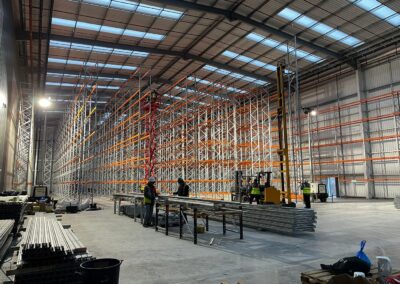
Our warehouse Racking experience is extensive. Take a look at a very small selection of some of the pallet racking projects we have completed over the years.


Trusted by all
Just Some Of Our Clients


Get started
Discuss Your Project
Our service is completely client-centric. We provide all manufacturer types, as well as fitters, engineers and inspectors; which means that not only can we deliver your entire project from start to finish, but that we can provide a fully bespoke solution for your individual needs. Get in touch to find out more.