
Maximising Mezzanine Efficiency
Mezzanine floors are a smart and cost-effective way to maximise floor space in warehouses, distribution centres, and production facilities. By adding a raised platform within your existing building, you can create additional storage or workspace without the need for major structural modifications. However, one critical factor to consider, is how the floor will be accessed by not just personnel, but also goods.
While staircases provide essential access for personnel, they are not designed for moving goods. Small items might be carried manually, but for frequent movement, bulk materials and palletised goods, a more effective solution is needed. Without the right system in place, your operation could face inefficiencies, potential stock damage, and most importantly, health and safety risks.
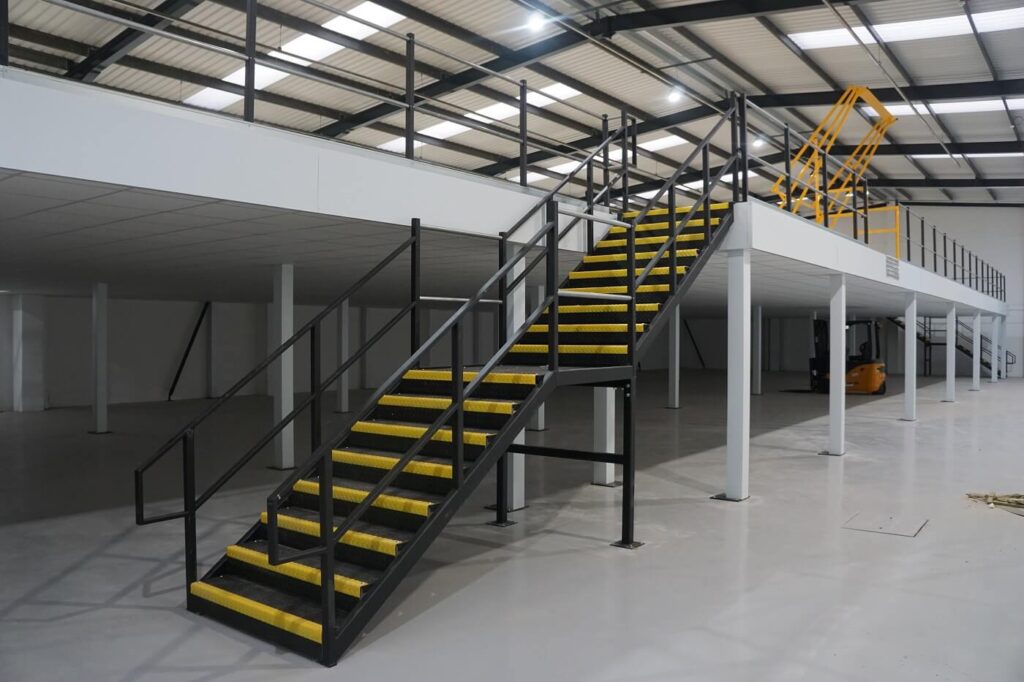
Selecting the right method for moving goods between mezzanine levels is essential for maintaining a safe and productive working environment. The best solution will depend on your facilities layout, the volume of goods being handled and your operational needs. Investing in the right system not only ensures seamless material flow but also enhances overall mezzanine functionality and workplace safety.
Why Safe Goods Movement is Essential
In any facility utilising mezzanine floors, it is vital to have an efficient and secure method for transporting goods between levels. Without the right systems in place, your operation may face several challenges:
- Manual Handling Risks – Lifting and carrying heavy items up and down stairs can lead to musculoskeletal injuries, a leading cause of workplace accidents and lost productivity.
- Reduced Productivity – Relying on manual handling slows down operations, creating bottlenecks, delays and higher labour costs.
- Damage to Stock – Poor handling methods can result in breakages, compromising stock availability, quality control and customer satisfaction.
- Workplace Congestion – Without dedicated transport solutions, staircases and mezzanine areas can become overcrowded, increasing the risk of accidents and hindering efficiency.
By integrating a purpose-built goods access system, you can enhance safety, minimise downtime, and ensure compliance with health and safety regulations, all while optimising productivity and protecting stock.

Solutions for Moving Goods Between Mezzanine Floors
There are several well-stablished solutions for transferring goods between mezzanine levels, each suited to different operational needs. These include pallet gates, goods lifts, goods chutes, and conveyor systems. Below is a closer look at their key features, considerations and best applications:
-
Pallet Gates
Pallet gates offer a safe and cost-effective method for transferring palletised goods between floors, acting as a protective barrier while allowing the controlled stock movement.
Key Features:
- Safety-first design – Prevents items from falling and reduces risk to workers.
- Manually operated – Simple, easy-to-use mechanism.
- Customisable sizing – Tailored to fit the mezzanine layout and load dimensions.
- Low-cost solution – Budget-friendly option for straightforward goods handling.
Considerations:
- Manual labour required – While effective, pallet gates still require manual operation, which may not be ideal in high-volume environments.
- Regular inspections required – Should be inspected as part of annual mezzanine inspections for ongoing safety and reliability.
Best for: Pallet gates are ideal for small to mid-sized operations with moderate goods movement, although seasonal peaks and other high demand periods can be managed effectively through multiple pallet gate installations where appropriate, and a pallet gate can be installed at each level of multi-tiered mezzanines. As a pallet gate manufacturer, WSL offer bespoke solutions tailored to your exact pallet dimensions for maximum efficiency.
-
Goods Lift
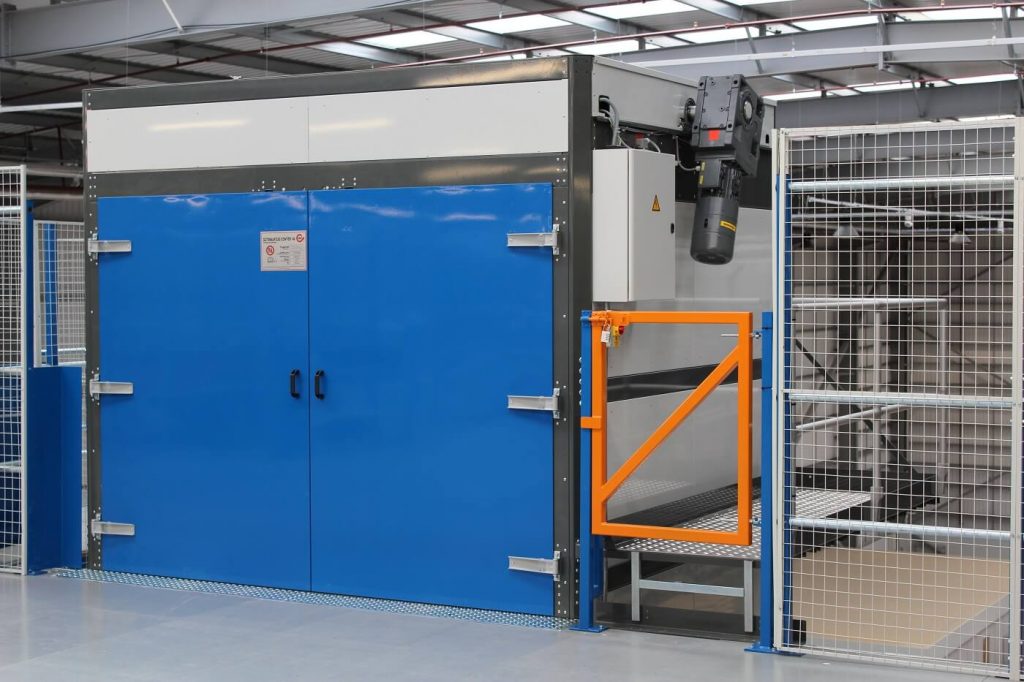
Goods lifts provide an efficient automated solution for moving heavy or bulky loads between floors. Available in hydraulic or electric models, they streamline vertical stock movement.
Key Features:
- High load capacity – Handles heavy and large-volume goods
- Safety mechanisms – Features automatic locking, emergency stop buttons, and overload sensors. No internal controls to prevent personnel use.
- Minimal manual handling – Reduces strain on workers and improves efficiency.
- Designed for durability – Built for continuous operation in demanding environments.
Considerations:
- High cost – Requires a larger upfront investment compared to simpler solutions like pallet gates.
- Space requirements – May need dedicated floor space, impacting operational layout.
- Ongoing maintenance – Requires periodic servicing to ensure reliability.
Best for: Goods lifts are ideal for high-volume operations where large or heavy goods are frequently transported between floors. They are well-suited for warehouses, factories and distribution centres needing a fully automated solution.
-
Goods Chute
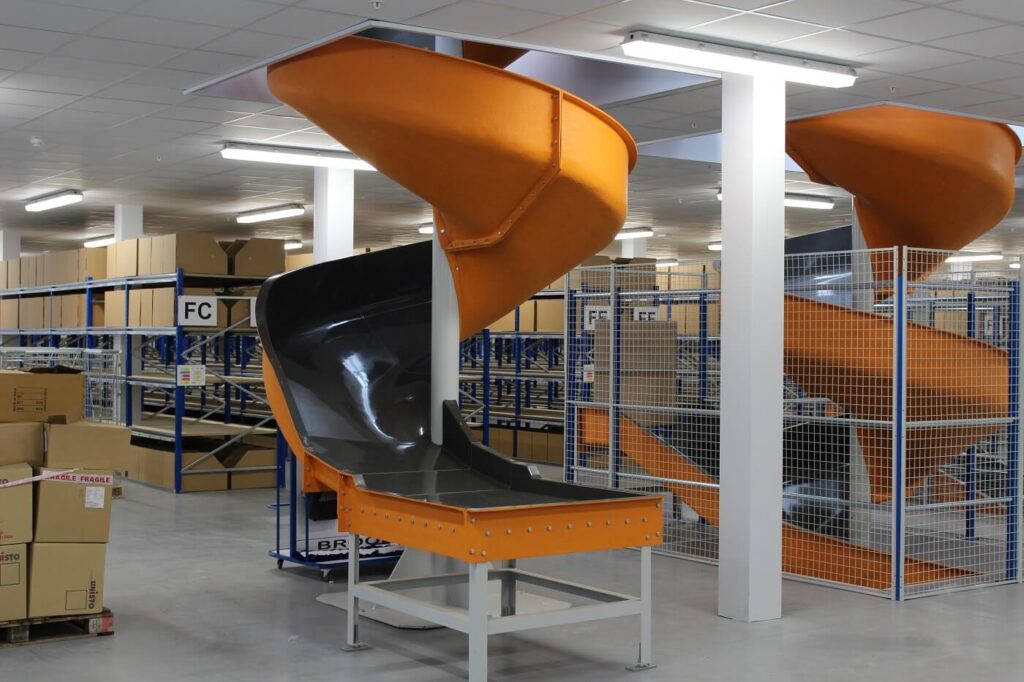
A gravity-fed option, goods chutes enable lightweight stock to move quickly from upper levels to lower ones with minimal effort.
Key Features:
- Energy efficient – Operates without power
- Customisable design – Tailored to different materials and industries
- Compact footprint – Ideal for facilities with limited floorspace.
Considerations:
- Limited load capacity – Only suitable for smaller, lightweight items.
- Risk of damage – Fragile items could be at risk due to free movement.
- One-way movement – Can only transport goods downwards, not back up.
Best for: Goods chutes work best in industries like retail, logistics, and e-commerce fulfilment centres, where high volumes of lightweight items need to be quickly moved from upper levels
-
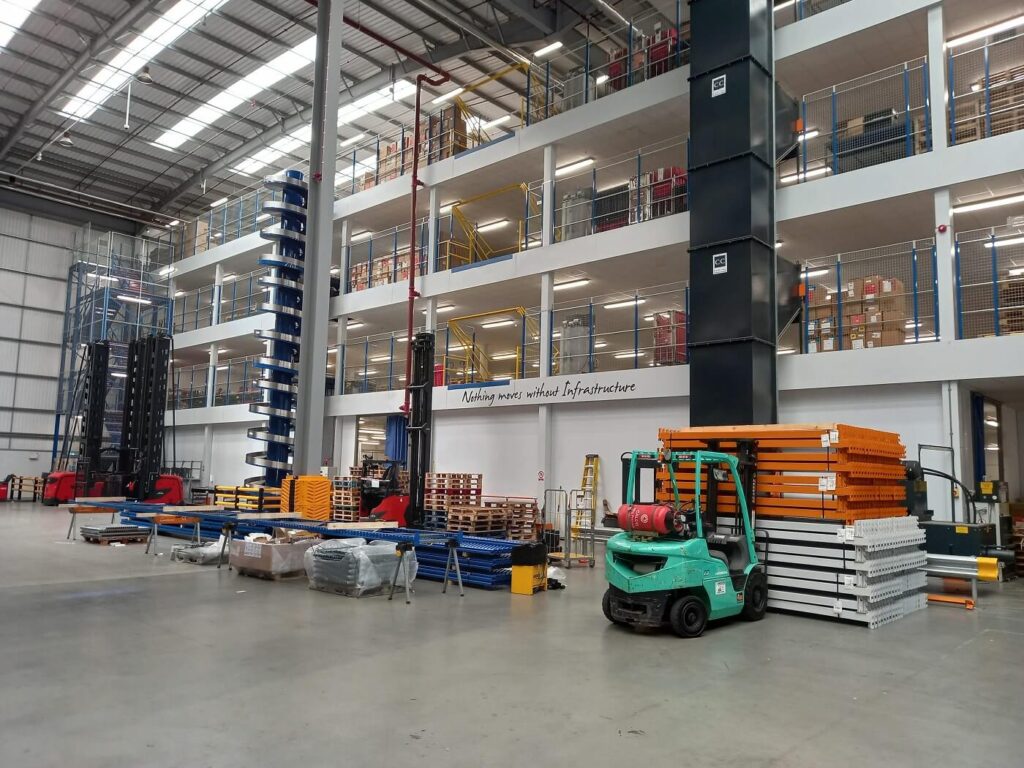
Conveyors
Conveyors provide automated, continuous flow of stock between mezzanine floor levels, eliminating manual handling.
Key Features:
- Motorised operation – Automates stock movement, improving efficiency.
- Flexible configurations – Includes incline, spiral and vertical conveyor options
- Seamless integration – Can be linked to warehouse management systems for optimised operations.
Considerations:
- High installation cost – Custom or large-scale systems can be expensive
- Regular maintenance required – Ongoing services ensures reliability
- Space requirements – Conveyors need sufficient room, which may impact facility layout.
Best for: Conveyors are perfect for high-throughput operations, such as warehouses, e-commerce fulfilment centres, and manufacturing plants that require fast, continuous goods movement.

Choosing the right system depends on your facility’s layout, goods volume and operational demands. Whether you need a simple manual solution or a fully automated system, investing in the right mezzanine access solution will enhance safety and productivity.
Enhancing Mezzanine Safety & Efficiency
Efficient goods access solutions are essential for warehouse, distribution, and manufacturing operations, allowing businesses to maximise space while maintaining safety and productivity. Whether you choose pallet gates, goods lifts, chutes, or conveyor systems, the right solution depends on your facility’s specific needs. Investing in the best-fit system not only minimises workplace risks but also improves workflows and enhances overall efficiency, ensuring your mezzanine floor remains a valuable asset rathe than a bottleneck.
Why choose WSL for your goods access solutions?
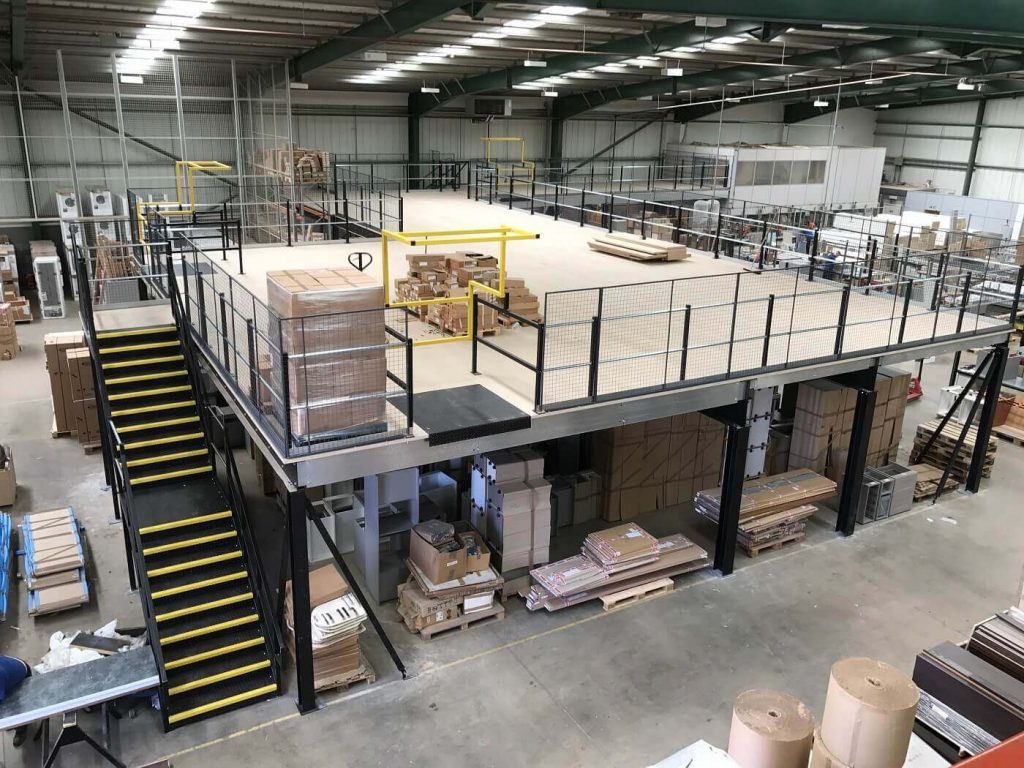
At WSL, we specialise in bespoke mezzanine floor solutions, understanding that safe and efficient access is a crucial part of the project. Whether you are installing a new mezzanine and exploring access options or upgrading an existing platform for better goods movement, our expert team is here to help.
With extensive experience in mezzanine design and manufacturing, WSL provides solutions that are safe, reliable, and fully compliant with industry standards. As a leading UK manufacturer, we design and produce high-quality mezzanines, edge protecting handrails, guide rails and kick plates as well as staircases, column guards and pallet gates.
As a UKCA-certified and Approved Manufacturer Full SEMA Member, we adhere to the highest safety and compliance standards, delivering durable, tailored solutions that improve warehouse efficiency and worker safety.
Mezzanine Goods Access – Frequently Asked Questions (FAQs)
-
What is the safest way to move goods between mezzanine floors
To ensure the safest method, you would need to consider the type and frequency of goods movement. A goods lift is often the safest and most efficient method for heavy loads, and for continuous movement a conveyor system is an effective option. Pallet gates offer a cost-effective option for moderate movement and good chutes are ideal for lightweight items being transported to lower levels.
-
Do I need a goods lift if I already use a pallet gate?
Not always. In many operations, pallet gates work perfectly well alongside a forklift truck, whilst improving safety as pallets are loaded and unloaded from the mezzanine. However, if your goods movement is becoming more frequent or involves heavier loads, a goods lift can offer a more efficient, low-effort alternative while further reducing manual handling risks.
-
Are pallet gates compliant with health and safety regulations?
Yes, provided they have been properly designed, installed and maintained. Pallet gates help prevent falls or injury and minimise manual handling risks which increases operational safety and improves compliance with health and safety standards.
-
How often should pallet gates and goods access systems be inspected?
Safety inspections of pallet gates and other mezzanine safety systems should be carried out as part of your annual mezzanine safety inspection with internal checks carried out periodically throughout the year.
-
What’s the best option for high-volume stock movement?
A goods lift or conveyor systems a re great options for high-throughput environments. They reduce manual handling, streamline workflow, and for further optimisation, they can integrate with warehouse management systems.
-
Can I install more than one pallet gate on a mezzanine floor?
Yes, multiple pallet gates are often used, especially on a large or a muti-tiered mezzanine. More than one pallet gate can help maintain efficiency and speed, particularly during peak periods, whilst preventing congestion or operational hold-ups.
-
What type of business benefit most from goods chutes?
Good chutes are ideal in operations where small, lightweight goods need to move quickly from upper to lower levels. E-commerce, retail and logistical operations would benefit the most from goods chutes.