
Warehouse Racking Systems
Push Back Racking
Unlock Greater Storage and Efficiency for Peak Performance
Push back racking is a high-density storage solution designed to optimise warehouse space while enhancing operational efficiency. This dynamic system allows pallets to be stored multiple positions deep, strategically moving them forward once the front pallet is picked. For stock with high turnover and no prioritisation for rotation, push back racking is very practical option.
Pushback Racking Designed Around Your Needs
WSL specialises in the design and installation of bespoke pushback racking solutions that optimise your warehouse space and streamline operations. As a SEMA Approved Manufacturer Full Member, we bring industry recognised standards, technical expertise, and a safety-first approach to every project.
Whether you’re upgrading your storage or planning a full warehouse fit-out, we’ll deliver a tailored system that works for your business.
Free Site Survey and Quote to Get Your Project Moving – Book your no-obligation site survey today. We’ll provide bespoke plans and a clear quote based on your needs. Call 0113 2045350 or email sales@wslmail.co.uk


Discover Pushback Racking
What is Pushback Racking?
Push back racking is designed to maximise pallet storage efficiency within a compact, space-saving system. When a new pallet is loaded, it smoothly pushes existing pallets further into the lane, with the system accommodating up to six pallets deep. Designed for a First-In, Last-Out (FILO) operation, the most recently loaded pallet is the first to be retrieved. As pallets are removed, the remaining ones will passively advance to the front, utilising gravity to seamlessly fill the available space.
How Does Pushback Racking Work?
When a new pallet enters the lane, it pushes the existing pallets further back, while the slight incline enables pallets to move forward naturally as the front pallet is removed. This movement can be achieved mechanically in three ways. Below, we outline the three push back racking variations and how each method facilitates the smooth transfer of pallets
What are the Key Features of Pushback Racking
- Immediate Access and Visibility – Direct access to the frontal faced pallets with picking and loading made easy
- Risk of collision minimised – Reduced risk of damage from forklift truck collisions when compared with drive-in racking
- No Need for specialist equipment – Compatible with most commonly used fork lift trucks
- Cost Effective – Reduces the costs of physical labour and cost per pallet whilst streamlining the picking process which increases productivity
Push Back Racking Variations
Explore the different variations of push back racking and how they contribute to smoother, more effective pallet management.

The Rail-Based System
Inclined rails are installed along the floor of each level, running the full length of the lane. Each pallet depth has its own set of rails, positioned slightly higher than the one before it. This design enables a newly loaded pallet to push the one behind it further into the lane, ensuring smooth and efficient storage. However, this rail-based system is the least commonly used variation of push back racking.

The Four-Sided Tray System
In this variation, pallets are supported by a four-sided tray that moves backwards as each new pallet is loaded. The first pallet is placed onto the highest-level tray, allowing the next pallet to push it backward due to its slightly lower level. The final pallet is loaded directly onto the rails. This configuration ensures smooth and efficient pallet movement.

The Roller System
This system relies on rollers installed along the lane to facilitate the movement of pallets. As a new pallet is added, the rollers allow it to push the existing pallets deeper into the lane, reducing the physical effort required. The smooth roller mechanism ensures efficient, seamless movement of pallets along the system, making this the most common push-back racking variation.
Gravity-Assited Flow
Ensuring Smooth Pallet Movement
The gravity-fed system offers a power-free storage solution that behaves like automation, providing the same efficiency and space optimisation, but without the associated maintenance or electrical costs.
Slightly sloped lanes use gravity to move pallets forward naturally once the front pallet is removed. While gravity initiates movement, additional design features ensure smooth and controlled operation. Integrated components such as friction controls, guide rails, and braking systems help maintain stability, preventing abrupt shifts or misalignment. These elements work together to regulate pallet descent, ensuring a safe and efficient flow.
By combining gravity with engineered design, push-back racking maximises warehouse space, streamlines inventory management, and enhances overall pallet handling efficiency.


What are the considerations for push back pallet racking?
To ensure push back pallet racking suits your warehouse and operational needs, consider the following:
Ceiling Clearance
The push-back racking system features an inclined design, with the rear positioned higher than the access point. This incline enables pallets to move smoothly toward the access face. To accommodate the height variation, ensuring sufficient ceiling clearance is crucial.
Potential Obstacles
Identify any structural columns, sprinklers, or heating systems that may affect installation.
Pallet Access Needs
As a deep storage solution, direct access is restricted to the front pallets. If regular access to all pallets is needed, consider high-density alternatives such as narrow aisle racking systems.
Rotation Requirements
For goods with high-priority stock rotation, consider systems like pallet live racking (FIFO) or radio shuttle racking, which can be configured to operate on either the FILO or FIFO methods.
Pallet Weight
Pallet weight is a key factor in push back racking design. WSL customises solutions to accommodate your minimum and maximum pallet weights, ensuring smooth movement without excessive force.
Industry-Specific Benefits
Push back pallet racking is used across many industries including manufacturing, cosmetics, home ware, pharmaceutical and food and drink. This cleverly designed storage system is suited to any warehouse looking to maximise storage capacity allowing them to store large numbers of product with high turnover that don’t require assisted stock rotation.
Heres how a push-back racking benefits specific industries:
Food & Beverage
- Ideal for fast-moving food products, particularly items with a longer shelf which don’t require strict FIFO compliance
- Reduced handling times improves warehouse sufficiency
-
Great for temperature sensitive goods owing to its compact configuration which maximises storage within a given surface area. This helps to reduce energy consumption in frozen or chilled areas.
Pharmaceuticals
- Safe and efficient storage for longer-lasting inventory
- Storage is sufficiently contained within a compact footprint to maximise space
- The deep lanes offer extra security for high value goods.
Retail and Household Goods
- Allows bulk storage of seasonal or high-demand goods
- Fast retrieval promotes speedy fulfilment
- Streamlines pallet replenishment in picking operations. When a pallet is deplenished, the picker can remove the empty pallet and a new full pallet will roll into position, meaning no addional mechanical handling to keep the picking operation going.

Comparison: Push Back Vs Other Racking Systems
Explore how Push Back Racking stacks up against other similar racking systems. This comparison table outlines the key differences between Push Back Racking, Pallet Live Racking, and Radio Shuttle Racking. While all three systems offer deep-lane storage with comparable capacities and automated pallet movement, the table highlights the unique features and distinctions of each system.


Tips for Safety & Efficiency in Push Back Racking
Maintaining safety is essential when using a push back racking system. Here are key steps to ensure a safe and efficient operation:
Keep moving parts free from debris
Motion is vital for the function of push back racking, so it’s crucial to keep all mechanical components unobstructed. Regular checks to ensure rails and trays are free from objects that could disrupt movement and the overall performance.
Ensure Forklift Truck Operator Training
Only allow employees with proper training and a valid forklift licence to operate the equipment. This ensures that they can handle the system safely and efficiently.
Adhere to System Weight Limits
Display weight load notices clearly and ensure operators are properly trained on how to distribute weight evenly within the system. This prevents overloading and ensures the racking operates within its capacity.
Push Back Racking Inspections: Why They Matter
Push-back racking inspections are essential for ensuring warehouse safety, efficiency, and longevity. These systems bear heavy loads and frequent movement, making them vulnerable to wear, misalignment, or unnoticed damage that could result in structural failure. Routine inspections help identify potential issues such as bent frames, loose components, or overloading, before they develop into costly accidents or operational disruptions.
By prioritising regular inspections, businesses can maintain a secure and efficient storage system that supports smooth warehouse operations. Ensuring the safety of your racking structure not only protects employees from injury but also safeguards inventory and minimises the risk of expensive repairs.
Regular inspections also help ensure compliance with the following safety regulations:
Provision and Use of Work Equipment Regulations 1998 (PUWER)
Under PUWER, all workplace equipment must be properly maintained and suitable for its intended use. Since push back racking is considered workplace equipment, it must comply with PUWER regulations to ensure safety and effectiveness.
Health and Safety at Work Act 1974
The Health and Safety at Work Act 1974 states that employers must provide a safe working environment for their employees. Failing to properly maintain a push back racking system would undoubtedly result in non-compliance with this regulation.



Why Choose WSL: The SEMA Advantage to Your Push Back Racking Project
WSL is an Approved Manufacturer Full SEMA Member (Storage Equipment Manufacturers Association), which means your push back racking project benefits from the highest standards of safety, quality, and compliance.
By choosing WSL, you gain:
Quality Assurance
Your racking is built to rigorous industry standards, ensuring structural integrity and durability.
Safety & Compliance Assurance
SEMA membership guarantees adherence to strict UK regulations, reducing risk and ensuring peace of mind.
Expert Design & Engineering
Our team applies SEMA best practices to create a bespoke push back racking system tailored to your space, load requirements, and operational needs.
Long Term Reliability
With WSL’s SEMA-backed expertise, your investment is designed for longevity, delivering efficient storage and enhanced warehouse productivity for years to come.
Choosing WSL means working with a trusted, fully accredited manufacturer that puts safety, precision, and performance first!
Maximising Cost Savings With Push Back Racking
Investing in push back racking systems can lead to substantial long-term savings. By optimising storage density, these systems minimise aisle space requirements, enabling a higher number of pallets to be stored within a limited floor surface area.
For businesses aiming to maximise warehouse capacity, push back racking offers an effective solution.
Beyond increasing storage capacity, this system also reduces forklift travel distances, which can lower operational costs, enhance efficiency, and decrease the likelihood of damage to both inventory and racking. These factors further contribute to overall cost reductions.
An offering of high-density storage, operational efficiency, and cost-saving potential, push back racking can deliver strong ROI when implemented in the right applications.
The benefits
Why choose push back pallet racking?
Easy to integrate
Push-back pallet racking can serve as the primary storage solution for your operation or be combined with other systems for a flexible setup. As a high-density racking system requiring just one aisle, it can be positioned in corners or against walls, minimising disruption to your workflow. Plus, there’s no need to modify your handling equipment to accommodate it.
No specialist handling equipment needed
The system is perfectly suitable for standard fork lift trucks so there is no need to purchase specialist trucks. This is useful for warehouses which currently use standard pallet racking systems and standard trucks.
High Density Storage
Push back pallet racking is one of the most popular solutions for those looking for a highly sophisticated compact storage solution for large volumes of SKUs. Loading and picking is carried out on the same single aisle so you can increase your storage by 75% through the elimination of numerous aisles no longer required.
Easy and safe loading and retrieval
Push-back racking is designed for efficient, secure loading and retrieval. Pallets are placed on nested rails, trays or rollers that enable a smooth motion as new loads push existing ones deeper into the system. When a pallet is removed, the next one automatically moves forward, reducing the need for forklifts to enter the racking structure. This not only speeds up operations but also enhances safety by minimising the risk of collisions and product damage. With a First-in Last-out (FILO) system, push-back racking maximises storage density while ensuring a controlled, organised retrieval process, making it ideal for high-turnover inventory.
Increases safety
The work of the forklift truck is minimised with less travel, less manoeuvres with only one aisle to navigate from where pallets are clearly visible. This reduces the chance of collision and reduces the time spent on the working aisle. As the there’s no need for the fork lift truck to travel multiple aisles, the chance of knocks and bumps into the structure is minimised
Saves time and money whilst adding value and increasing productivity
With fewer aisles to navigate there’s less time spent searching for specific pallets saving you time and money on labour. The loading and retrieval processes become optimised and more time efficient which in turn increases productivity. The ability to store more pallets with push back pallet racking within a specific area adds more value to your space and in turn reduces your per pallet costs.
Why choose wsl?
What Sets Us Apart
Our dedicated and experienced team will take time to understand your goals and asses your needs. Our extensive market knowledge and practical experience enables us to design and develop a bespoke system that is as unique as your business. Here at WSL we aim to maximise your available space and increase productivity through creating innovative and ‘outside the box’ solutions. Our commitment to excellence, our portfolio and our recommendations provide our customers with confidence in our ability to deliver solutions that are not only superior, but very cost-effective. Our in-house services simplify the process from design to installation by giving you just one port of call. By continuing to remain independent across the whole market we commit to providing our valued customers with the highest quality and – wherever possible – British products, all at competitive prices. We aim to fit our pallet rack systems with as little inconvenience to our clients as possible, using highly experienced fitters overseen by qualified project managers.
Our Accreditations


client stories
Some Case Studies
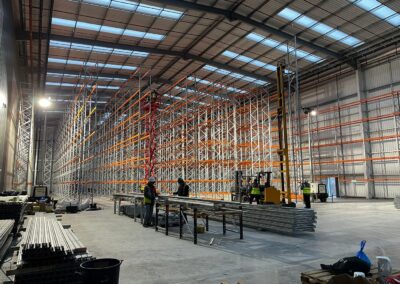
Our warehouse Racking experience is extensive. Take a look at a very small selection of some of the pallet racking projects we have completed over the years.


Trusted by all
Just Some Of Our Clients


Get started
Discuss Your Project
Our service is completely client-centric. We provide all manufacturer types, as well as fitters, engineers and inspectors; which means that not only can we deliver your entire project from start to finish, but that we can provide a fully bespoke solution for your individual needs. Get in touch to find out more.